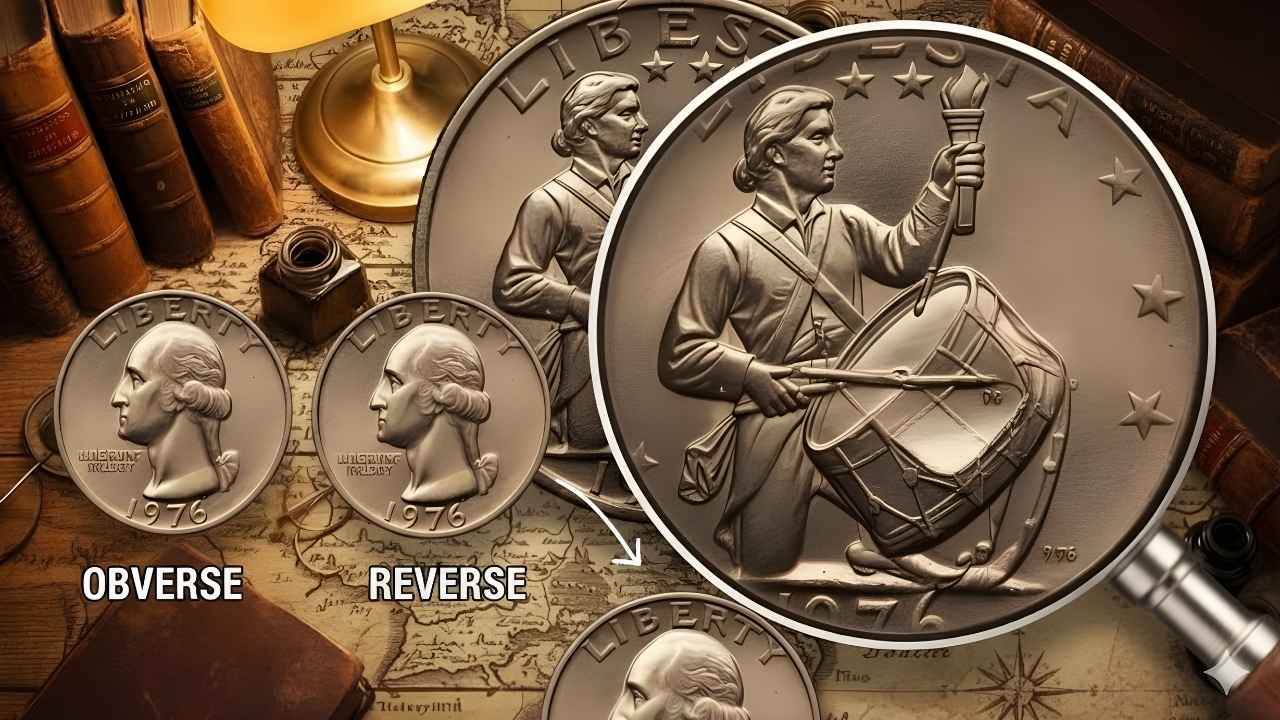
The 1976 drummer boy quarter is one of the most recognizable modern coins ever produced. Created to celebrate America’s bicentennial, it features a colonial drummer on the reverse instead of the traditional eagle. Millions were struck by the United States Mint for circulation across the United States, which means most examples are still only worth face value. However, certain versions and errors can be worth far more. Collectors often search bank rolls and old collections hoping to find high-grade or unusual varieties that escaped heavy circulation.
Why Some Are Worth More Than Face Value
Most circulated coins sell for 25 cents to a dollar, but uncirculated pieces with sharp details and no wear can reach $5 to $20. Silver-clad proof versions made for collectors are more valuable, especially if they remain in original packaging. High-grade coins graded MS67 or higher by professional services like Professional Coin Grading Service can command over $100 because of their rarity in pristine condition. Registry collectors compete for the finest known examples, which drives prices even higher.

Valuable Errors to Look For
Collectors actively search for error coins because they often carry premium prices. A double die obverse, where lettering appears slightly doubled, can bring $150 or more. Off-center strikes, clipped planchets, or wrong-metal strikes are also sought after. The rarer and more dramatic the error, the higher the price tends to climb. Coins struck on silver planchets intended for collector issues are especially desirable if authenticated.
How Condition Impacts Price
Coin grading ranges from Poor to Mint State. The fewer scratches, marks, or signs of circulation a coin shows, the higher its grade and value. Coins stored carefully since 1976 often bring higher offers because they retain original luster. Even small differences in grade can mean large differences in value, which is why collectors examine coins under magnification and proper lighting.
Final Verdict
The 1976 drummer boy quarter is common in everyday change, but select versions can be surprisingly valuable. Checking mint marks, condition, and possible errors is the key to discovering whether yours is ordinary or collectible. Dedicated collectors know that patience and careful inspection often lead to the best finds.