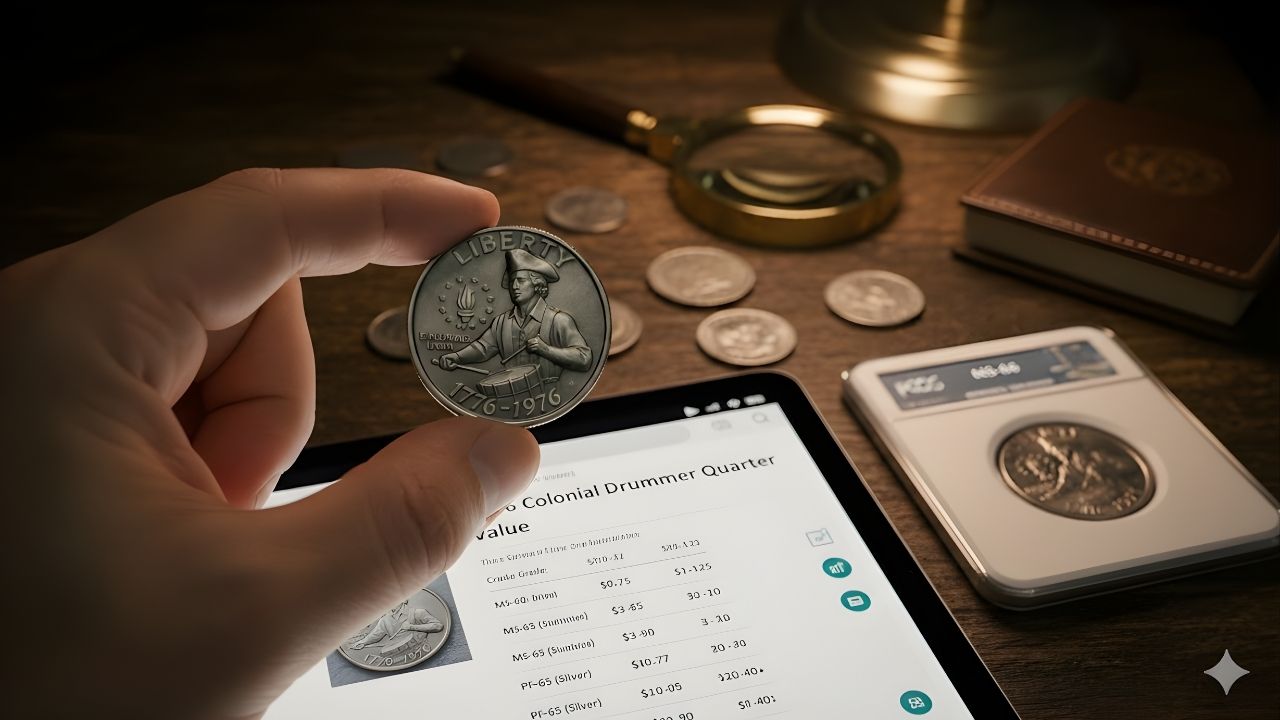
The 1976 drummer boy quarter is one of the most distinctive coins ever released in American circulation. It was issued to celebrate the nation’s bicentennial, marking 200 years since independence. Instead of the traditional eagle design used on most quarters, this coin features a colonial drummer holding a torch surrounded by stars. The design symbolized patriotism, unity, and remembrance of the Revolutionary era. The coin was produced by the United States Mint and released nationwide across the United States, making it instantly recognizable even decades later.
The Artist Behind the Design
The reverse artwork was created by Jack L. Ahr, whose design was chosen through a national competition. His depiction of the drummer was intended to capture both historical authenticity and visual simplicity so it would strike well on circulating coins. The design remains one of the few times a public competition determined the look of a U.S. coin, adding another layer of interest for collectors.
Composition and Coin Types
Most 1976 drummer boy quarters were struck in a copper-nickel clad composition, which was standard for circulating coins of that period. However, special collector versions were produced using 40 percent silver. These silver coins were not intended for everyday use but were sold in mint sets and proof sets. Because of their metal content alone, silver examples often carry higher baseline values than regular clad versions. Collectors can usually tell the difference by examining the coin’s edge or weight.
Value Based on Condition
Condition is the single most important factor when determining how much a 1976 quarter might be worth. Coins that spent years in circulation often show scratches, worn details, and dull surfaces, which keeps their value close to face. Uncirculated coins, on the other hand, can sell for several dollars or more depending on quality. High-grade examples with sharp details, strong luster, and no visible marks are much scarcer and can command premium prices in collector markets.
Rare Errors and Varieties
While most bicentennial quarters are common, certain error varieties can be surprisingly valuable. Collectors search for doubled lettering, off-center strikes, or coins struck on incorrect metal blanks. These mistakes occurred during the minting process and slipped past inspection. Because error coins are unusual and unpredictable, they often attract strong demand. The more obvious the error and the better the condition, the higher the potential value.
Why Collectors Still Love It
Even though millions were produced, the drummer boy quarter continues to hold strong appeal among hobbyists. Its patriotic theme, one-year commemorative design, and historical significance make it stand out from standard issues. Many collectors keep them as part of type sets, which aim to include one example of every major coin design. Others enjoy searching through rolls of quarters hoping to find a high-grade specimen or rare variation.

Tips for Identifying a Valuable Example
Anyone curious about a 1976 quarter should start by examining the date and reverse image to confirm it is the bicentennial type. Next, check for a mint mark and inspect the surface for unusual details or errors. Using a magnifying glass and proper lighting can reveal subtle features that are easy to miss with the naked eye. Proper storage is also important, since coins kept in protective holders retain their condition and collector appeal far better than those left loose.
Final Verdict
The 1976 drummer boy quarter is a coin that blends history, artistry, and collectibility in a single small piece of metal. While most examples remain common, select high-grade coins, silver versions, and error varieties can be worth far more than their face value. For collectors and casual hobbyists alike, this bicentennial issue remains a fascinating reminder that even everyday pocket change can hold a story worth discovering.