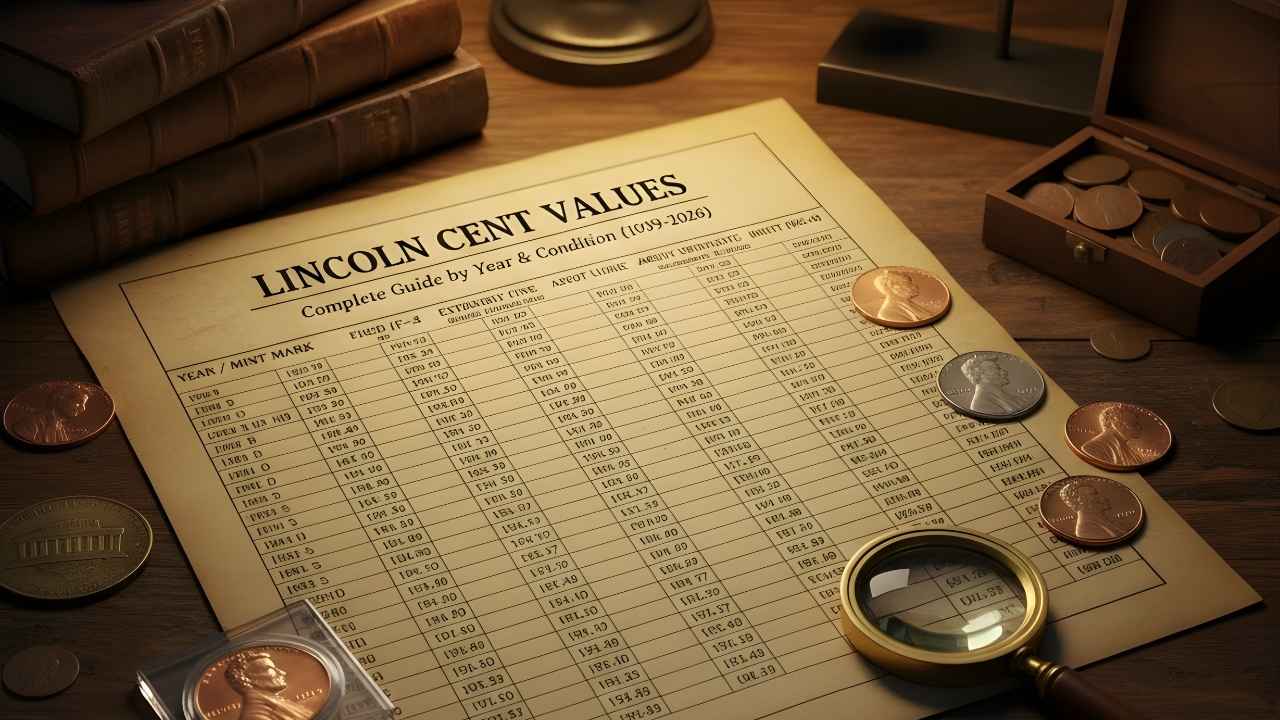
The Lincoln penny is one of the longest-running coin designs in American history, first introduced in 1909 and still produced today. Featuring the profile of Abraham Lincoln, it was the first regular U.S. coin to depict a real historical figure. Over more than a century, billions have been struck by the United States Mint, yet certain years, mint marks, and varieties are worth far more than one cent. A value chart helps collectors quickly identify which coins are common and which may be worth saving.
How Value Charts Work
A Lincoln penny value chart organizes coins by date, mint mark, and condition. Early dates with low mintages usually appear at the top of value lists, while modern coins are typically near face value unless they contain errors. Condition is shown in grades ranging from heavily worn to uncirculated. Even a common date penny can become valuable if it survives in pristine condition with strong color and detail.
Early Years That Command High Prices
Coins struck between 1909 and the early 1930s tend to be the most valuable because fewer were produced and fewer survived. The famous 1909-S VDB cent is one of the most sought-after issues, valued from hundreds to thousands depending on grade. Other early San Francisco or Denver mint coins from the teens and twenties also bring strong premiums, especially when they show sharp lettering and minimal wear.

Mid-Century Pennies and Their Worth
Lincoln pennies from the 1940s through the 1960s are widely collected but generally more common. Most circulated examples sell for only a few cents above face value. However, certain exceptions exist. Wartime steel cents from 1943, proof coins, and well-preserved red specimens can sell for significantly more. Collectors often separate pennies from this era by color classification, since bright red copper surfaces usually bring higher prices than darker brown ones.
Modern Pennies and Hidden Surprises
Pennies minted after the 1970s are typically abundant, but that does not mean they are worthless. Some modern coins with minting mistakes can be surprisingly valuable. Off-center strikes, doubled lettering, or coins struck on the wrong metal planchet can sell for hundreds of dollars. Because these errors are unpredictable, collectors often examine rolls of pennies hoping to spot unusual details that others overlooked.
Condition Levels in a Value Chart
Grading plays a major role in determining price. Coins labeled Poor or Good usually show heavy wear and minimal detail, making them worth little unless rare. Fine or Extremely Fine coins retain more design elements and often sell for modest premiums. Mint State coins show no circulation wear and may display original luster. These high-grade examples often command the highest values, especially when certified by professional grading services.
Why Some Pennies Become Valuable
Several factors influence a penny’s worth. Rarity is the most obvious, since fewer surviving coins mean higher demand. Historical significance can also raise value, particularly for coins tied to important events or design changes. Eye appeal matters as well. Collectors prefer coins with smooth surfaces, attractive color, and crisp details. A coin that combines all these qualities can be worth far more than its age alone might suggest.
Tips for Using a Value Chart Effectively
Collectors should compare their coins carefully with chart listings, paying attention to mint marks, dates, and condition. Using a magnifying glass helps reveal small features that affect value. It is also wise to avoid cleaning coins, since cleaning can damage surfaces and reduce collector interest. Storing coins in protective holders helps maintain condition and ensures accurate grading if they are later evaluated.
Final Verdict
A Lincoln penny value chart is an essential tool for anyone interested in coin collecting, whether beginner or experienced. It transforms an ordinary pile of pennies into a searchable record of history and potential value. While most Lincoln cents remain common, a small percentage hold surprising worth, proving that even the smallest denomination can become a treasured collectible when rarity, condition, and timing come together.